
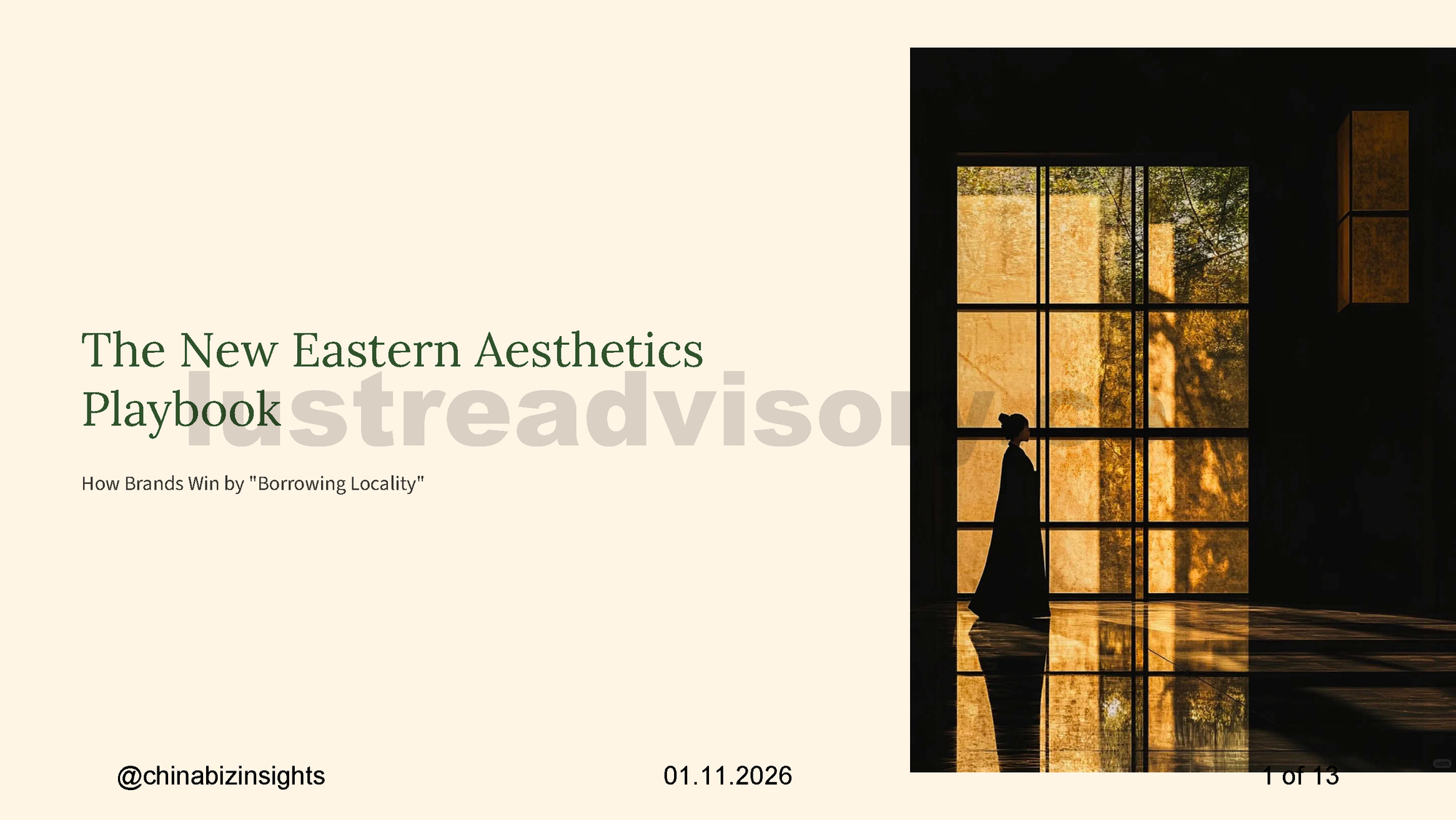
In today’s China-facing consumer landscape, Eastern aesthetics is no longer a decorative layer. It has become a competitive language. The era of lazy localization - adding red-and-gold festive codes and calling it cultural relevance - is over. As cultural confidence rises and discretionary spending becomes more value-disciplined, Chinese consumers increasingly reward brands that demonstrate aesthetic sovereignty: an ability to work with China’s real geography, material heritage, and contemporary cultural psychology, not just its symbols. For global brand leaders, creatives, and retail strategists, understanding this shift is now strategically critical, because it determines whether a brand is perceived as a visitor borrowing motifs or a local participant borrowing locality.
This post is for members only
Signup now to read the post and get access to the full library of posts for subscribers only.
Become a MemberAlready a member? Signin