In this case, we examine the strategic joint venture between Starbucks and Boyu Capital, where Starbucks sold a 60% controlling interest in its Chinese retail operations. While the deal is based on a USD $4 billion enterprise value, Starbucks disclosed a total business valuation exceeding USD $13 billion by including the net present value of future licensing and royalty fees. This "asset-light" pivot allows the company to monetize heavy retail assets while retaining high-margin profits from its intellectual property and supply chain.
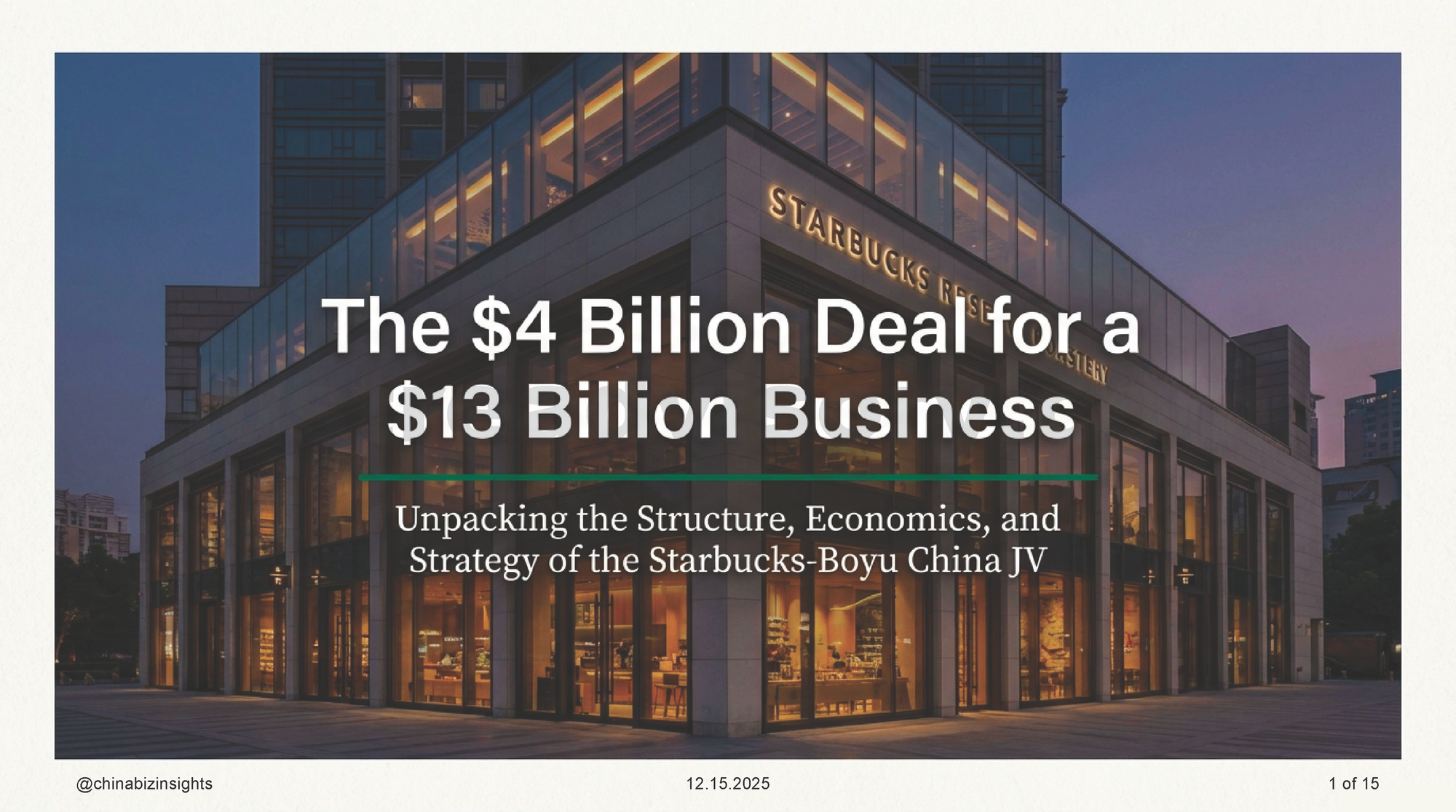
For Boyu, the partnership offers a political hedge and a platform to expand the brand amidst fierce competition from local low-cost rivals. The analysis suggests the deal is priced at a reasonable earnings multiple once these complex royalty structures are properly factored in. Ultimately, the transition reflects a broader "China playbook" for Western multinationals seeking to balance operational localization with long-term economic extraction.
This post is for paid members only
Signup now to read the post and get access to the full library of posts for subscribers only.
Premium AccessAlready a member? Signin