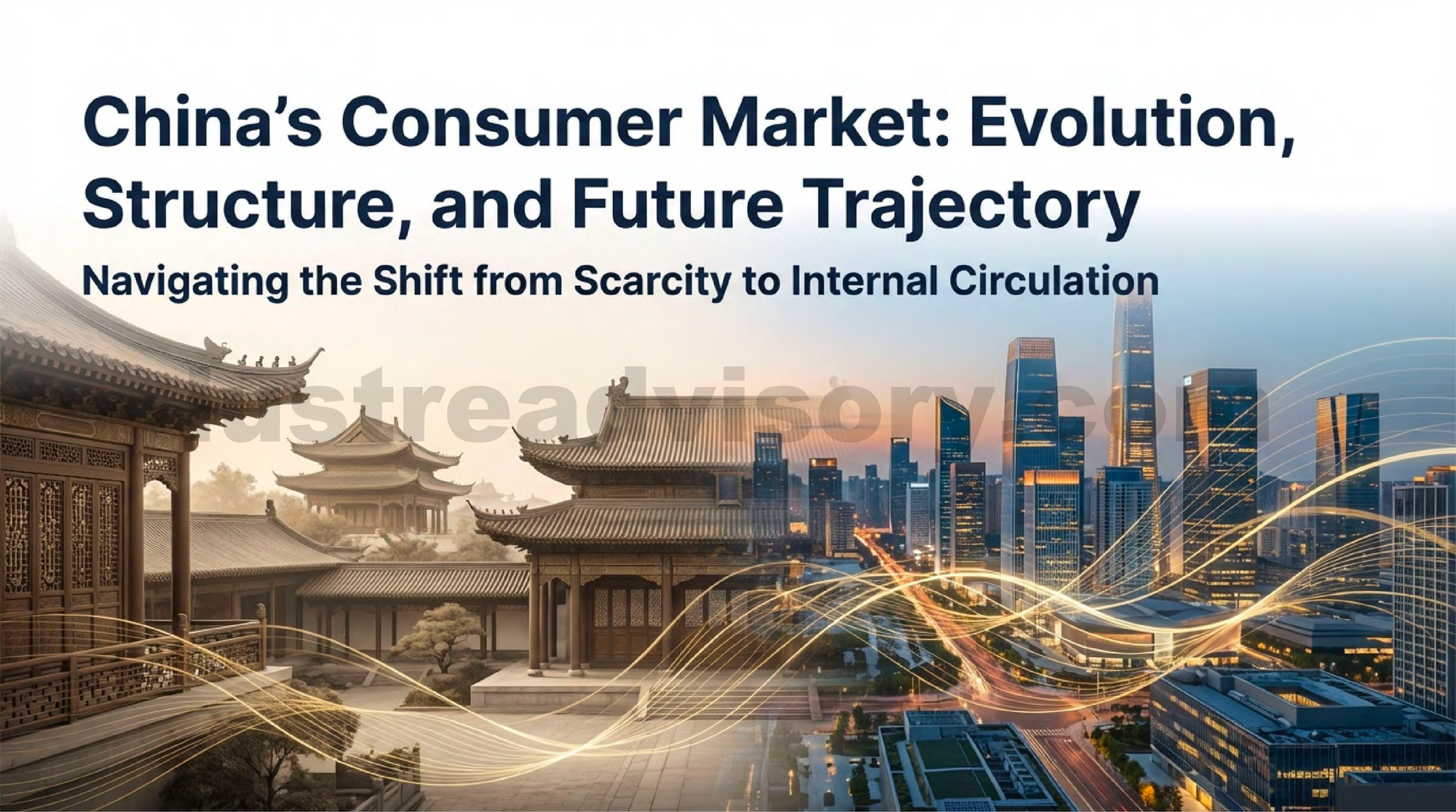
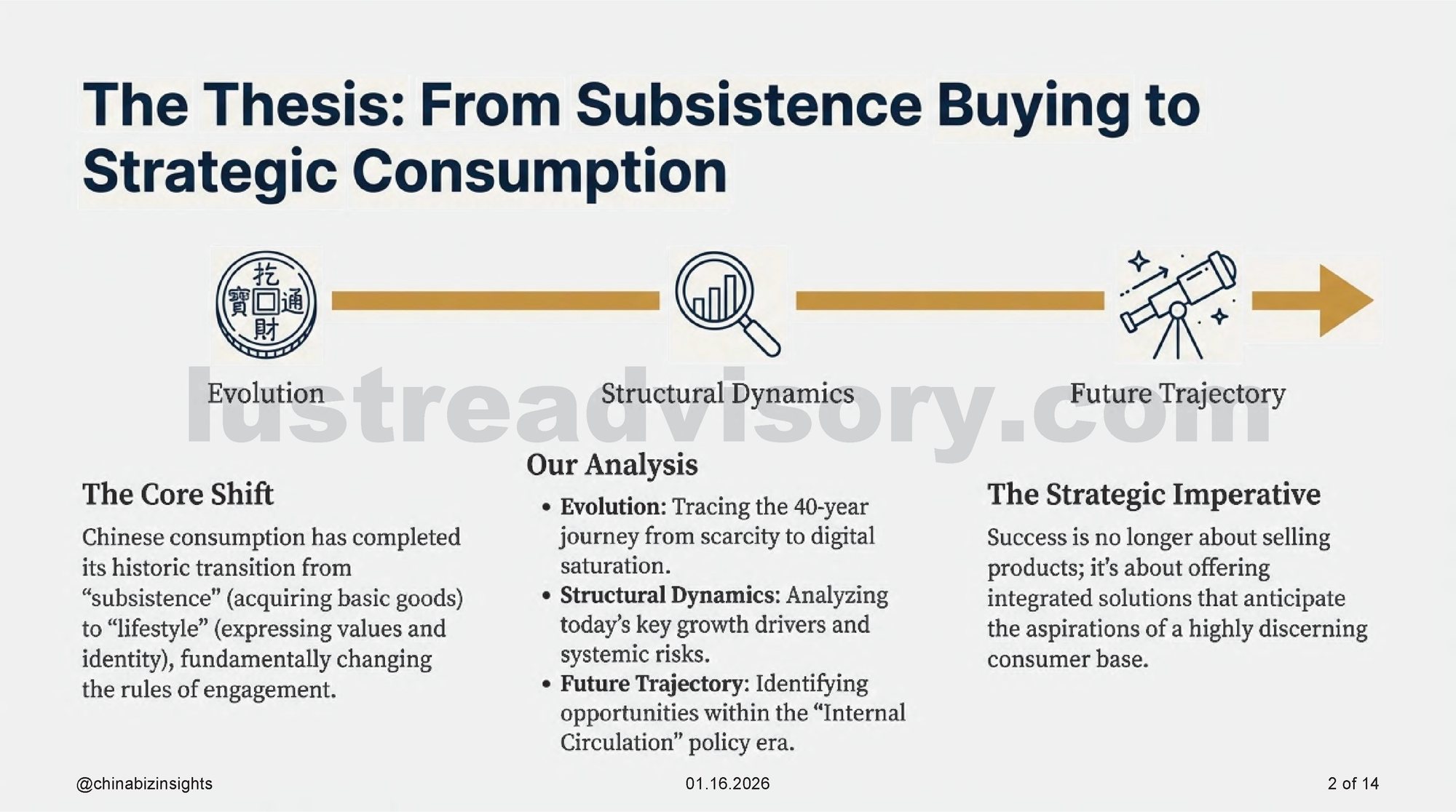
Over the past four decades, China's consumer market has transitioned from a period of scarcity and basic survival to a sophisticated, digitally-driven landscape centered on personal lifestyle. Historical analysis reveals a progression from the initial acquisition of household durables in the 1980s toward a modern experience economy defined by brand consciousness and service-oriented spending. Today, e-commerce and mobile payments dominate the retail environment, with significant growth appearing in lower-tier cities. Despite this evolution, the sector faces structural headwinds such as slowing income growth and wavering consumer confidence, which the government’s internal circulation strategy seeks to mitigate. Current trends highlight a shift toward green and smart consumption, where purchasing decisions act as expressions of environmental values and technological integration. Ultimately, the sources suggest that future economic success depends on moving beyond selling simple products to offering integrated lifestyle solutions that resonate with evolving consumer aspirations.
This post is for paid members only
Signup now to read the post and get access to the full library of posts for subscribers only.
Premium AccessAlready a member? Signin